ENTERPRISE UX RESEARCH | COMPLEX SYSTEMS | PRODUCT STRATEGY
Natalie Chiang
Enterprise UX researcher who turns complex systems, tangled workflows, and stakeholder misalignment into research that drives real product decisions.

ENTERPRISE UX RESEARCH | COMPLEX SYSTEMS | PRODUCT STRATEGY
Enterprise UX researcher who turns complex systems, tangled workflows, and stakeholder misalignment into research that drives real product decisions.
Five flagship case studies demonstrating mixed-method research, workflow analysis, heuristic evaluation, usability testing, and research-to-product impact.
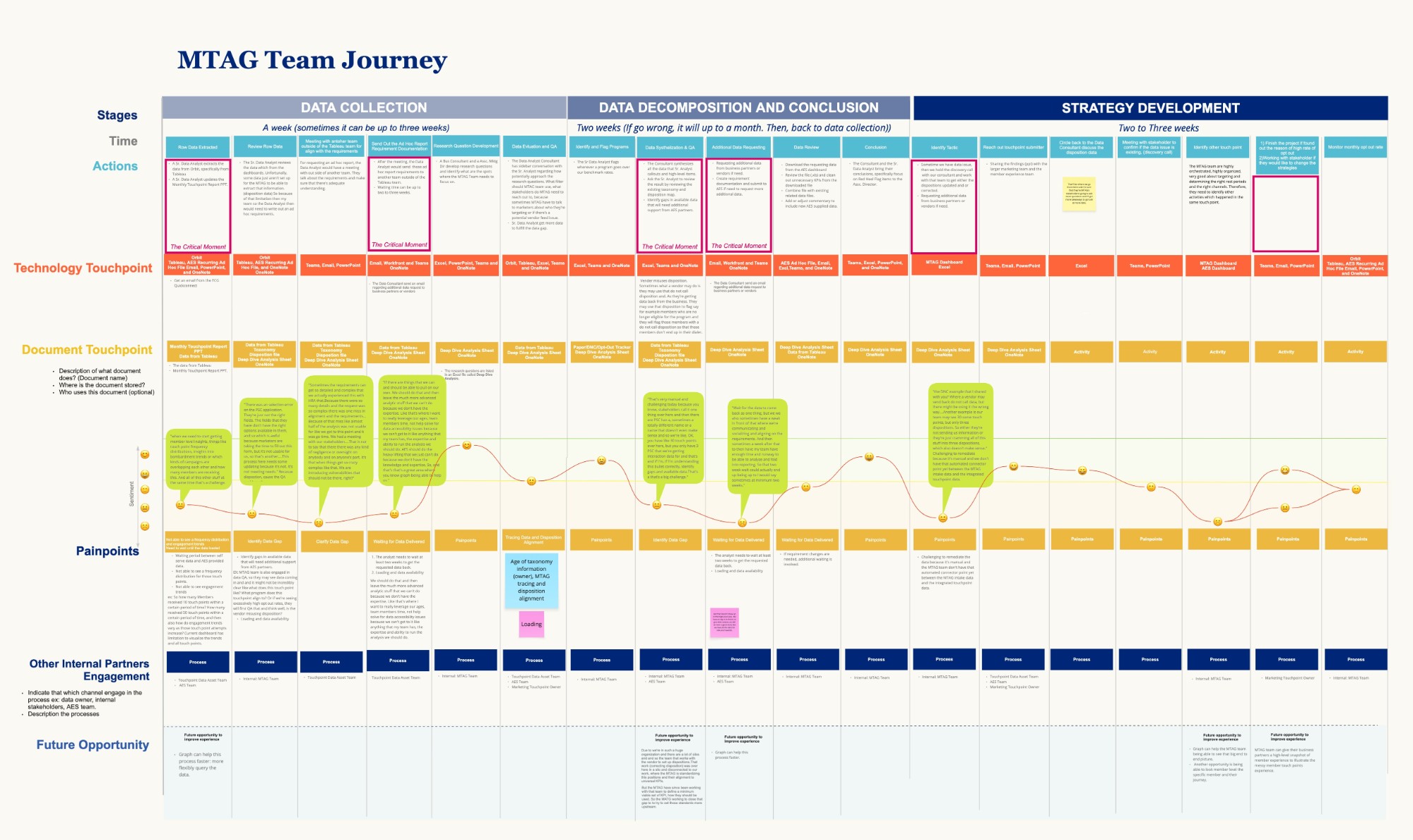
175M member touchpoints in 2022 — too many of them the wrong ones, at the wrong time. Research uncovered why, and the redesign protected $22.6M in revenue.
View full case study →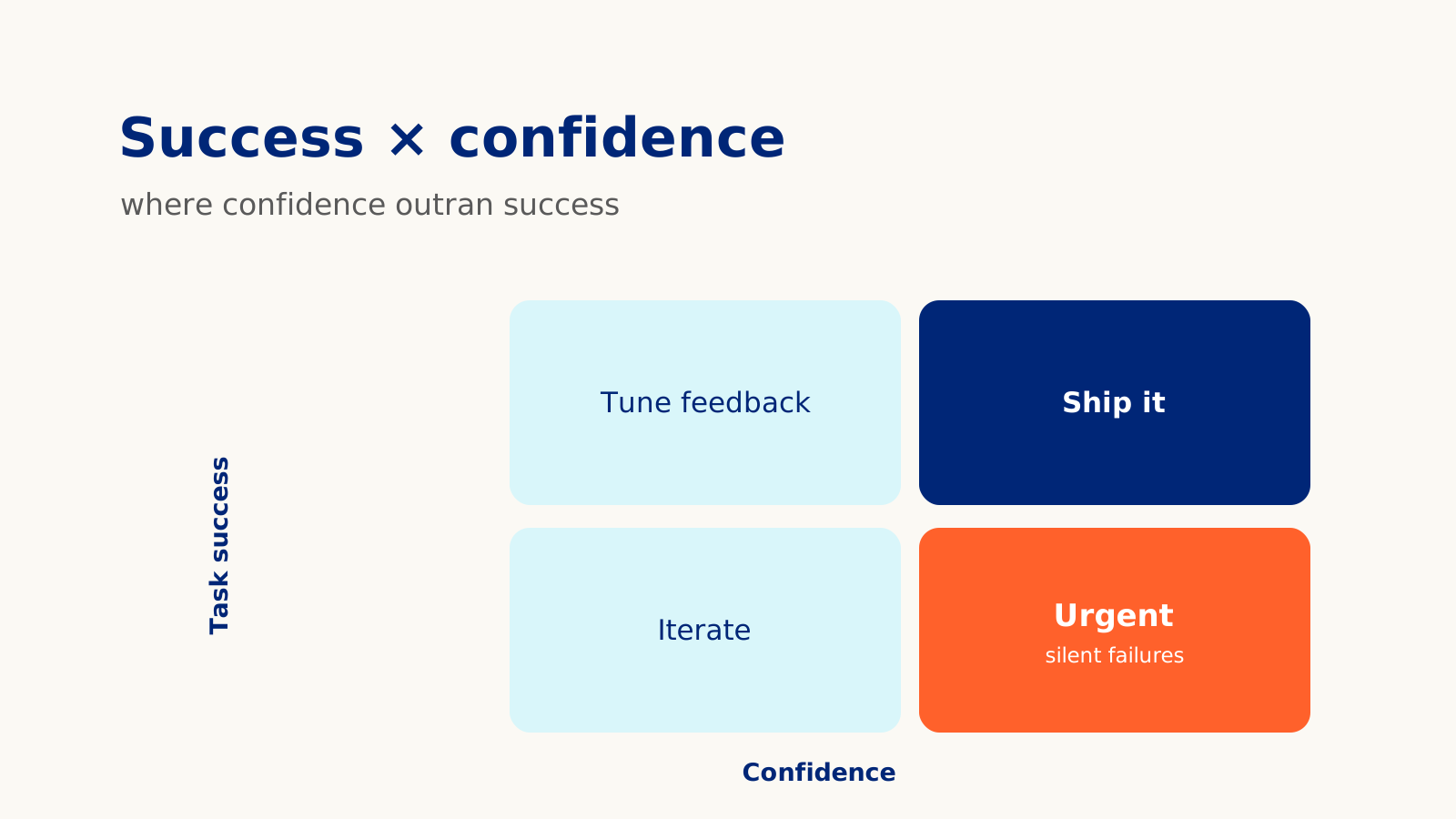
Two rounds of usability research reshaped a confusing member-analytics tool — and a success-vs-confidence read caught three tasks users were sure they'd completed but hadn't. The guided redesign tested 89% positive, with a natural-language AI feature I recommended.
View full case study →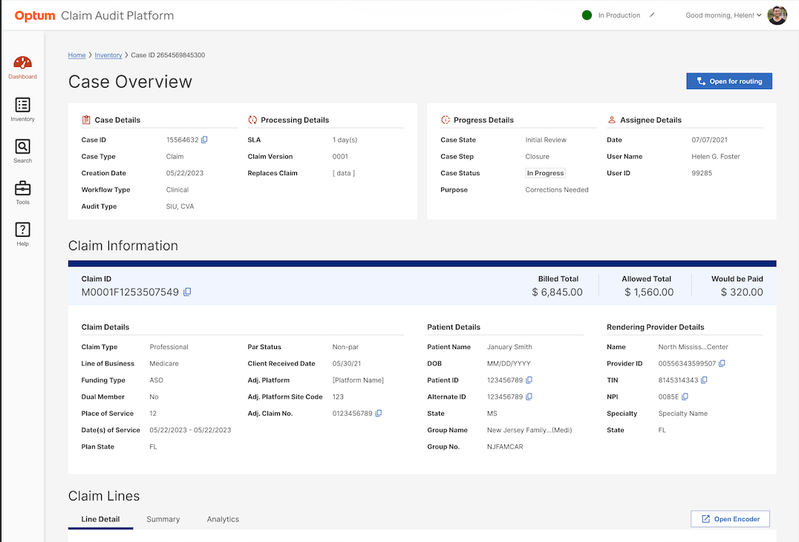
Auditors were drowning in a broken process. Workflow research identified the friction costing $20M annually — and a redesign that streamlined the review and earned a Grade-A usability score (91.4 SUS).
View full case study →
A multi-expert heuristic review of healthcare enrollment workflows surfaced 134 usability violations — and a prioritized roadmap that gave product teams a clear path forward.
View full case study →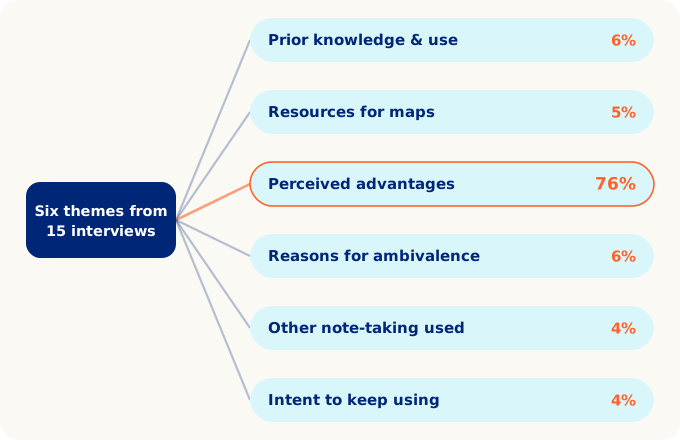
A four-month controlled study of whether a visual note-taking tool helps international students keep pace in economics. The tool group matched domestic peers on exams and participation, found the course more interesting, and the quality of their maps predicted their grades.
View full case study →I am a UX researcher with experience across enterprise healthcare, regulated industries, and complex organizational systems. My methods are rigorous and mixed — but what stays constant across every engagement is the ability to make invisible complexity visible, turn ambiguous problems into clear research direction, and deliver findings that actually influence product decisions.
My Ed.D. in Learning & Instruction grounds my practice in evidence-based methodology and gives me a distinct lens on how people navigate, adapt, and struggle within complex systems. It's why I read usability problems the way I read learning problems: people aren't failing the system — the system is failing to teach them. Healthcare and enterprise tools are where the cost of that failure is highest, which is exactly why I'm drawn to them.
I integrate AI into my research workflow as infrastructure, not a shortcut. I use Claude for research strategy — study design critique, discussion guide iteration, and synthesis pressure-testing — and Claude Code for research operations: automating transcript processing, coding-scheme application, and repetitive analysis tasks that traditionally consume researcher hours. For quantitative work, I run statistical analysis in Google Colab (Python), where AI-assisted coding lets me move from raw survey data to inferential results — ANOVA, regression, inter-rater reliability — with fully reproducible, inspectable notebooks.
I'm running an LLM-as-judge reliability study — measuring how closely AI (LLM) raters agree with trained human raters, using ICC, quadratic-weighted kappa, and correlation. I'm building the analysis in Google Colab (Python) with Claude Code and writing it up for journal publication. It's in progress — and it's the same question I ask of any AI feature: not whether it can, but whether it's reliable enough to trust.
I am responsible for protecting participant privacy and ensuring responsible research practices.
I evaluate context, nuance, and what findings actually mean.
I translate research insights into product decisions and business outcomes.
$22.6M
Revenue protected
175M
Annual touchpoints
$20M
Est. annual savings
350K+
Residents served